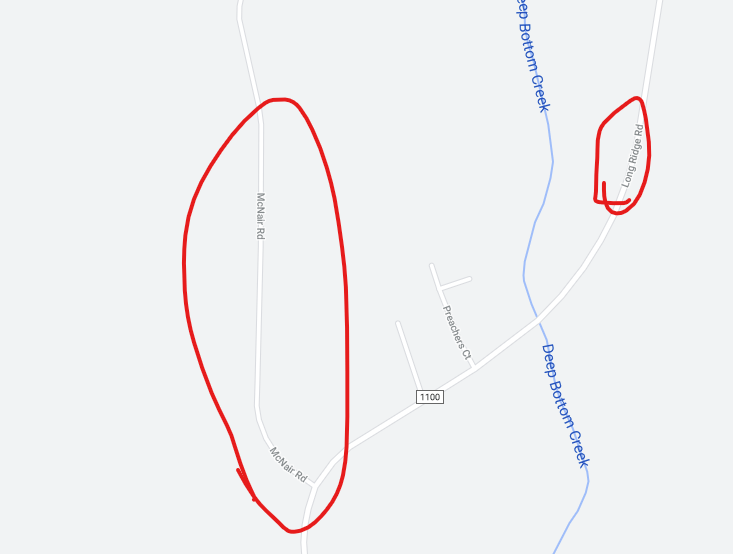
If there is one reason for me to consider myself wealthy, it is because of the family and community I was born into. I grew up in the Long Ridge community of Plymouth, located in eastern North Carolina. If you are taking 64 east on your way to the outer banks from Hwy 95, you will ride right through my hometown. I grew up around hard working black Americans who owned their homes and their farms. Some of them supported their families with the incomes from the local mill or textile factories. Others owned businesses, were school teachers, preachers or farmers. I didn’t grow up with able bodied people collecting government support. Everyone who could work, did. Or at least that is the way I remember. Our community loved and supported one another. To me, this is wealth.
A huge part of my wealth is my own family. When I look at my family tree, I see that my the lives of my forefathers were were spent providing for their families, serving the Lord and trying to hold on to their land.
My Grandfather: James McNair
Most times when I mention this man, my eyes get misty. His love for his family, cannot adequately be conveyed with my limited literary skills. His skin was so dark and leathery from the many hours he spent outside in the sun tending his farm. Work started at 7 AM and ended about 12 hours later. He was the father of 13 surviving children and didn’t have much patience for too much noise or disobedient children. He had a very deep voice that boomed when he corrected us. He always walked around with a tiny top-bound spiral notebook in his shirt pocket and a pen or pencil. On market day or any other day, he was ready to do math like a mathematician to ensure that his profits were not perched upon by the unscrupulous folks responsible for sorting, weighing and pricing his livestock or harvested crops. He took his pad and pencil to the bank when he checked his account. My grandfather used to tell me of the many black farmers who were cheated out of profits when they “went to market”. Though my grandfather was forced to drop out of school in 7th grade after the death of his young mother, he always stressed education to his children and grandchildren. “Education is one thing the white man can’t take away from you.” He had witnessed, first hand, black farmers unfairly denied loans while white farmers and landowners were being afforded advantages, information and resources. These same advantages, information and resources were deliberately withheld from black farmers and landowners. He knew well that others ceased on opportunities to defraud through trickery. He did not trust white men. At all. He cautioned me to embrace his truth. I think my grandfather understood that the same Word of God that commands us to love, also tells us not to put our trust in men. When it came to white men, he had seen more than enough to make keeping the latter, very easy. My grandfather believed very much in the teachings and leadership of Dr. Martin Luther King, Jr. He made sure that his children attended Plymouth High School the first year of desegregation.
About 20 years ago, my grandfather told me the story of his grandfather (my great, great, grandfather) Anthony Walker. Before then, I had never questioned the origins of McNair Road.
My Great, Great, Grandfather: Anthony Walker (1850-1921)
At some point after slavery, Anthony went “up north” and worked for some years. He came back to Plymouth and purchased approximately 100 acres of land. He managed to hold on to his property until his death. My grandfather described a beautiful home and grape vineyard on the property.
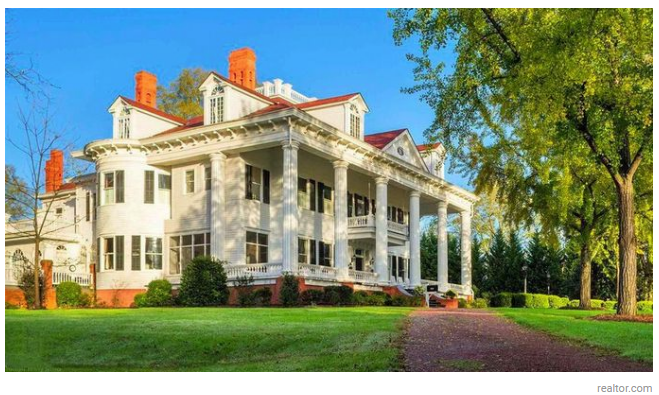
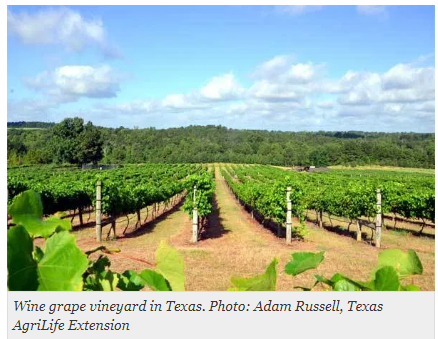
In my imagination, this is what Anthony Walker’s property looked like. In reality, it did not.
When Anthony died, the land passed to his children but they were unable to maintain the property taxes and lost it. His son-in-law, (my great-grandfather, George McNair) was able to purchase the property from whites who had gotten the land after the property was lost. He began selling parcels of the land to his McNair relatives and the area became known as “McNair Town”. Today, there is a road that runs a mile long through the land: McNair Road.
My Great, Great, Great-grandfather: Prince Walker (1812 – 1899)
Imagine my excitement when I learned that Anthony’s father, Prince Walker, helped his 15 year old son, John Prince, escape from slavery! John Prince belonged to the master of a neighboring farm who was cruel. He was beaten many times for various offenses and began running away at age 13. Whenever he was caught, he was severely punished and beaten. On his last unsuccessful attempt, he was brought back to his dad’s (Prince) plantation. When Prince returned John Prince to the plantation that he “belonged” to, he warned them not to beat him or he would help him runaway. Eventually, there was another beating. When John Prince escaped to his father’s plantation, they carried out a plan that the Prince had been secretly working on. If you want to learn more about John Prince, go over to my cousin Taneya’s blog: https://taneyakoonce.com/category/walker/.
Brief interruption from the new millennium: I’m trying to imagine my 15 year old leaving our family and traveling far away to begin a life without the rest of us. My brain just won’t do the math on this one……so many more thoughts on this.
There was one other thing that I learned: Prince Walker was the overseer of a large plantation in Plymouth. He also seemed to be respected by whites as his obituary appeared in the local paper with a commendation regarding his character. The characterization is not at flattering by today’s standards. Did you hear what I just wrote?
My great, great, great-grandfather was an overseer.
For a moment I thought I had to make a judgment about what kind of person Prince Walker had to have been based on the two pieces of information I had about him. And honestly, I had a brief identity crisis. Should I hate myself? Should I be ashamed of him? Should I be ashamed to have descended from someone that had been “promoted” to execute the the system of oppression? Should I tell my family? Do I call a special family meeting to share this shocking/odd/sad/interesting/true news? So many questions….but, they didn’t last long. My next question was, how do I interpret this information and what shall I do with it. I’ve just learned two pieces of information about an ancestor that at first seemed contradictor. Is he a sellout black plantation overseer or a heroic father who plotted and successfully executed a slave escape? He could be both. He could be neither. After sitting with this information for a few days, I came to this conclusion: My great, great, great-grandfather ‘s story is the story of many black Americans who have had to simultaneously lived within the system and at the same time subvert it in order to survive and to ensure that others are able to do the same. Besides, without him, there would be no me. There would not be any of his amazing descendants who have made their mark of significance in this world.
There is no shame in acknowledging our history. If there is, it is okay to sit with it and deal with it. We cannot heal from something we refuse to deal with. Once we heal, we must allow a transformation to occur so that we make it our business to strive for the greatness our collective present and future deserve.
Please visit Taneya Koonce’s blog to learn more about her genealogical discoveries. Everything I learned about Prince and John Walker came from her research. She also has a Facebook Community where she shares “strategies for saving and organizing your research, photos, and stories”. She is an amazing gift to our family and I am so blessed to have encountered her work. Thank you Taneya!
Teneya’s Blog: https://taneyakoonce.com/
Taneya’s Facebook Group: https://www.facebook.com/groups/academy.legacy.leaders/about
 blackandwhiteandshadesofgreen